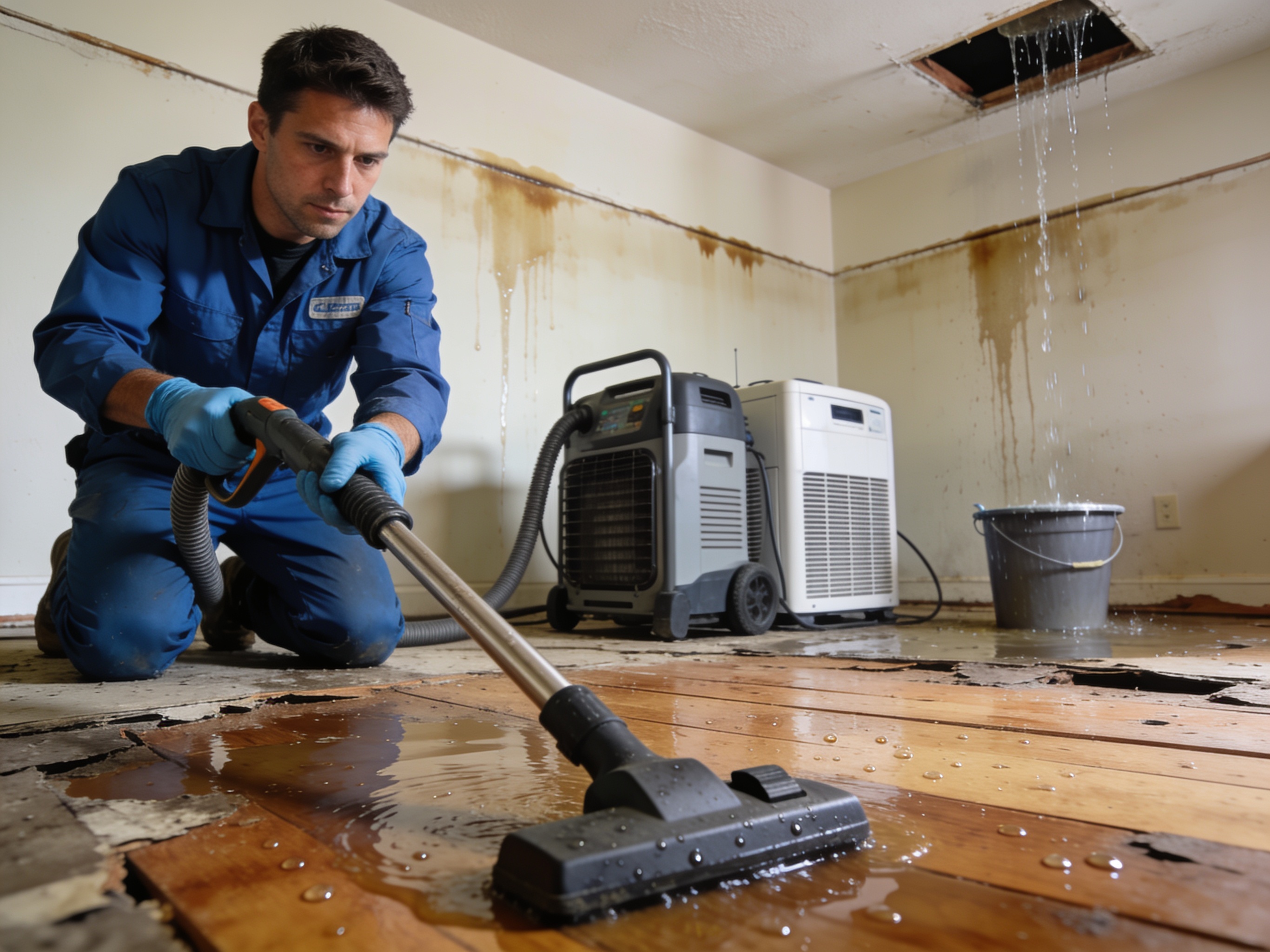
Green Valley sits south of Tucson along I-19, where summer monsoons send water down arroyos and into older single-level homes built from the 1970s onward. Many properties sit on larger lots with gravel yards and flat or low-slope roofs that collect debris during the dry months then leak once the rains hit. Our crew at 5575 S Houghton Rd responds directly to these calls, bringing extraction and drying equipment suited to the stucco-and-block construction common here.
Access from the east side of Tucson lets us reach Green Valley addresses quickly via the freeway without crossing the city. We see repeated issues along streets like Esperanza Boulevard and near the golf course communities where irrigation lines run close to foundations. Seasonal humidity lingers after storms, so we focus on pulling moisture from under slabs and inside walls before mold sets in the Sonoran Desert heat.
Residents in Green Valley often need help after roof overflows or water heater failures in utility rooms tucked at the back of homes. We match drying methods to the actual lot drainage and soil type rather than using one-size-fits-all approaches.
Around 5. Green Valley
We regularly work near:
- 📍Green Valley Park
- 📍Continental Elementary School
- 📍Desert Meadows Park
- 📍Green Valley Recreation Center on Esperanza Boulevard
- 📍Anamax Park
Water Damage Restoration in 5. Green Valley — Local Notes
- •Many 1970s-1980s homes have flat roofs and minimal roof slope, so monsoon debris quickly blocks drains and sends water under stucco walls.
- •Lots along the Santa Cruz River corridor and near Canoa Ranch sit on sandy loam that holds moisture longer after heavy rain, requiring longer drying times under slabs.
- •Narrower streets in the older sections of Green Valley Country Club limit large equipment access, so we stage most gear at the curb and run shorter hoses.
- •Irrigation systems tied to community wells often leak near foundations during the dry season, creating hidden moisture that only shows up after the first monsoon.