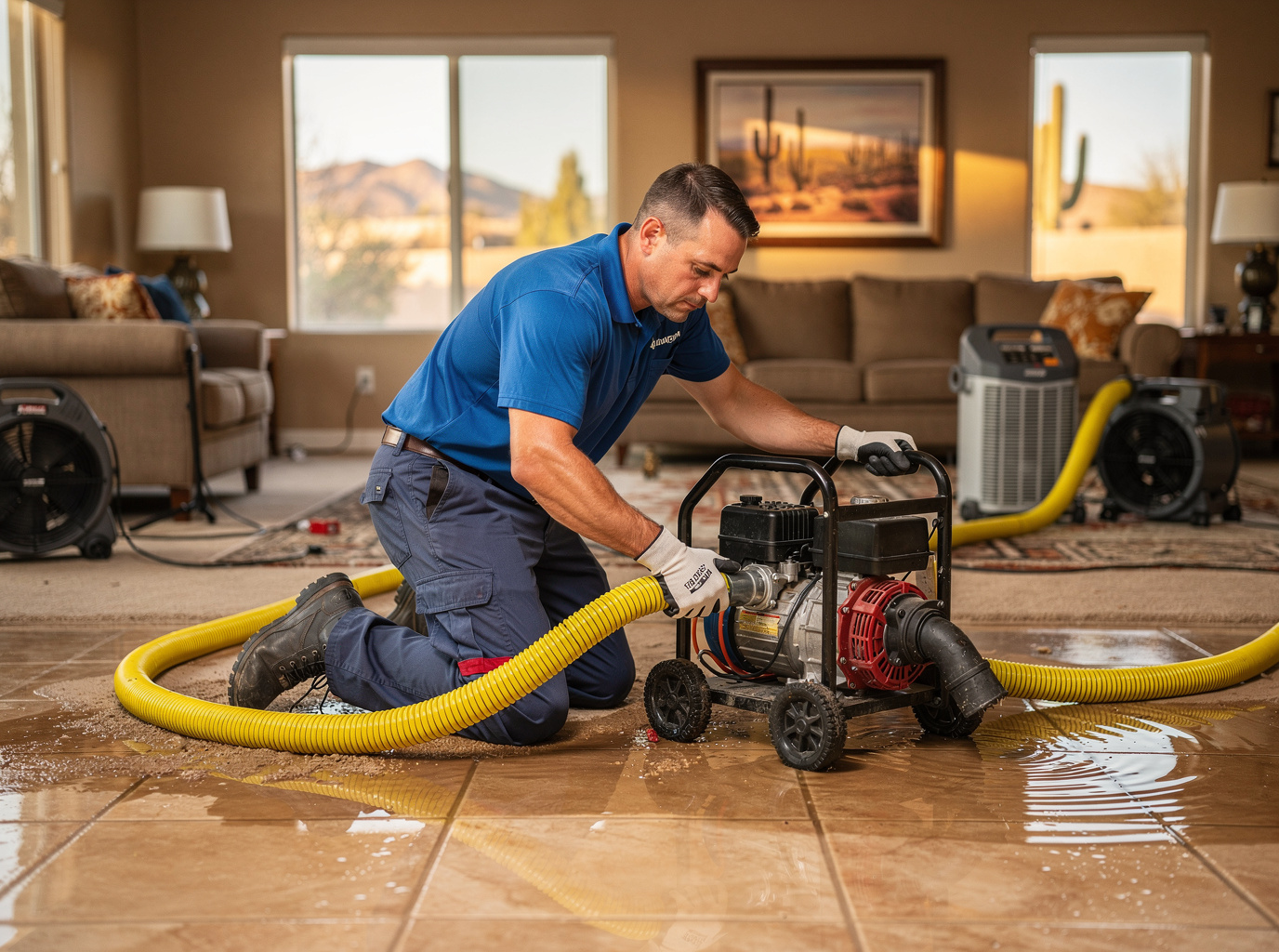
Tucson homes built before 1990 often have galvanized or polybutylene lines that fail at joints after years of mineral buildup from hard water. When a line bursts inside a slab or behind drywall, water travels along the vapor barrier and pools under tile. Extraction crews must pull baseboards and use moisture meters on the concrete because trapped moisture later fuels mold in the dry heat once temperatures climb above 100 degrees.
Monsoon runoff from the Santa Rita foothills funnels through neighborhood arroyos and can push several inches of water under stucco walls on east-side properties near Houghton and Irvington. Older block construction absorbs water at the footer, so crews cut weep holes and run air movers for days rather than hours. Skipping the hidden wall cavities leaves salts that wick back to the surface and damage new paint.
Appliance leaks from refrigerators or washing machines on second floors in Rancho Vistoso or Dove Mountain frequently travel through HVAC chases and collect above the garage ceiling. Technicians map the path with infrared before opening drywall because insulation in these homes is often blown cellulose that holds water like a sponge. Full removal prevents hidden rot in the truss plates.
After any standing water event, Tucson code requires documentation of moisture levels below 15 percent before drywall replacement can begin. Homeowners who attempt DIY drying with box fans alone usually miss the subfloor plywood, which swells and buckles under new flooring once the next dry season arrives.
Technician insight
In Tucson, the thing that catches most people out with water damage restoration is monsoon water entering through weep holes in block walls near arroyos; homeowners think the floor is dry but the footer stays saturated for weeks because the desert soil holds moisture against the stem wall.
East-Side Monsoon Intrusion
Water entered a 1980s block home near Houghton and 22nd after a July storm. Crews found sediment behind baseboards and under the slab vapor barrier. Extraction and targeted drying prevented mold growth in the wall cavities; new baseboards and paint finished the job before the next heat wave.
Water Damage Restoration Service Services We Offer
✓Burst Pipe Water Extraction
Locate and isolate failed lines, then remove standing water from slabs and wall cavities before mineral deposits set in Tucson hard water.
✓Monsoon Flood Cleanup
Clear sediment and debris from arroyo overflow that enters homes near the Santa Rita and Rincon foothills, followed by antimicrobial treatment on affected block.
✓Slab Leak Detection and Repair
Use acoustic and infrared tools to find leaks under concrete without unnecessary demolition in older Tucson neighborhoods with original plumbing.
✓Appliance Leak Restoration
Trace water paths from failed refrigerators, dishwashers, or washing machines through chases and ceilings, then dry and replace damaged materials.
✓Sewage Backup Remediation
Remove contaminated water from main line backups common after heavy monsoon rain, followed by disinfection and disposal of porous materials.
Water Damage Restoration Service Cost in Tucson, CA
| Service | Typical Range | What Affects It |
|---|---|---|
| Initial Assessment And Extraction | $450–$900 | Varies with access to slab leaks versus surface water only. |
| Drying Equipment Rental Per Day | $125–$250 | Number of days rises with monsoon humidity and cellulose insulation. |
| Drywall And Insulation Replacement | $2.50–$4.50 per sq ft | Higher when matching textured stucco or removing second-floor chases. |
| Full Sewage Remediation | $1,800–$3,200 | Includes disposal of porous materials and disinfection. |
Ranges are typical for Tucson, CA and confirmed with an exact written quote before any work starts.
How it works
- 1
On-Site Assessment
Technician arrives from the Houghton Road base, maps moisture with meters, and identifies hidden paths in slab or wall construction typical of Tucson homes.
- 2
Water Removal
Extract standing water and sediment using truck-mounted equipment suited for monsoon debris loads.
- 3
Drying And Monitoring
Place air movers and dehumidifiers, then return daily to check readings until levels drop below 15 percent.
- 4
Restoration
Remove and replace damaged drywall, insulation, and flooring, matching original stucco and tile finishes found in local neighborhoods.
Pricing
Cost depends on water volume, affected square footage, and whether slab or wall cavities require opening.