2026-11-09 · Javier Morales
Monsoon Season Water Damage Prevention In Tucson
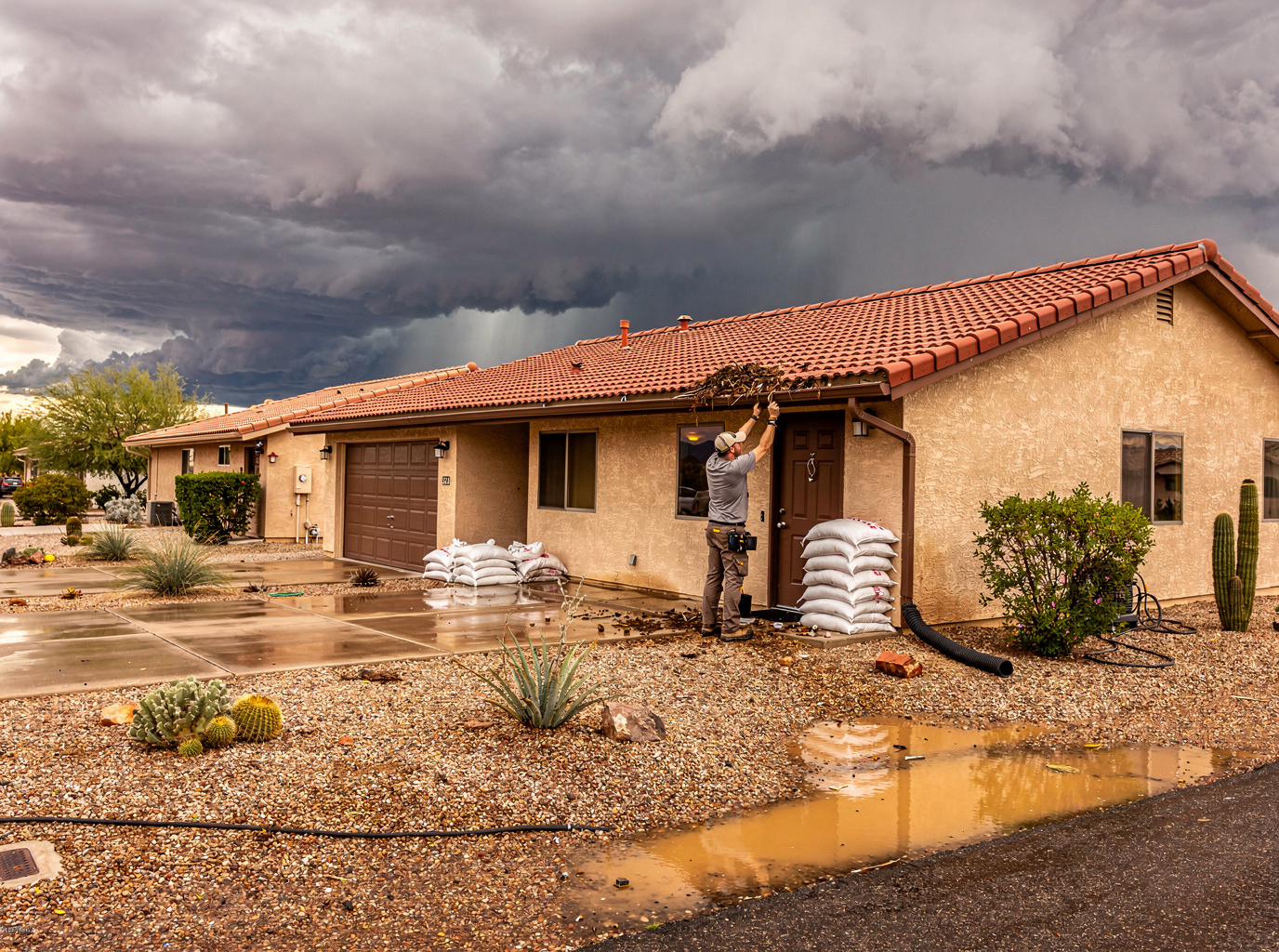
Preventing monsoon water damage in Tucson starts with checking roof seals and clearing drainage paths around your property before the July rains begin. Homes in neighborhoods like Catalina Foothills and Tanque Verde often sit on slopes where runoff from the Santa Catalina Mountains can overwhelm older gutters and low spots in yards. The desert soil here, mostly decomposed granite mixed with caliche layers, sheds water quickly until it saturates, then channels it toward foundations instead of absorbing it.
Preparing Roofs and Gutters Before Monsoon Season
Tucson roofs face intense sun most of the year followed by sudden downpours that can exceed one inch in thirty minutes. Walk the perimeter of single-story homes in areas like Casas Adobes or Flowing Wells and look for cracked flashing around chimneys and skylights. Replace any missing tiles or shingles now rather than after water finds its way into attic insulation. Clean debris from gutters and downspouts so water flows freely into the street instead of backing up against fascia boards. In older neighborhoods with 1970s and 1980s construction, check that downspout extensions reach at least five feet from the foundation to avoid saturating the soil next to the house.
Improving Yard Grading and Drainage Around Foundations
Many Tucson lots were graded decades ago when builders paid less attention to directing water away from slabs. Walk your yard after a test with a hose and watch where water pools near the house. Add soil to create a slope of at least six inches over the first ten feet away from the foundation in places like Vail or Corona de Tucson. Install French drains or channel drains in low spots common on properties near the Rillito River wash. The article How Tucson Soil And Drainage Affect Water Damage Risks explains how caliche layers force water sideways instead of down, increasing pressure on stem walls.
Sealing Windows, Doors, and Exterior Penetrations
Monsoon winds often drive rain sideways under stucco cracks and around window frames in homes built before 1990. Apply fresh exterior caulk around all window and door frames in neighborhoods such as Drexel Heights and Tucson Estates. Check that weep holes in brick or stucco remain open so trapped moisture can escape. Install or replace door sweeps on exterior doors to block water that sheets across patios during heavy storms. These small steps reduce the chance of interior drywall damage that later requires Water Damage Restoration.
Inspecting for Hidden Moisture After Early Rains
Even with preparation, some water finds interior paths through roof vents or plumbing penetrations. After the first monsoon event, use a moisture meter on ceilings and walls in bathrooms and laundry rooms common in 1980s ranch homes across Oro Valley. Pay special attention to areas under evaporative coolers where overflow pans can crack from years of mineral buildup. The guide Inspecting Your Home For Hidden Moisture After Heavy Rainfall shows how to spot discoloration that appears days after the rain stops. Early detection prevents mold growth that spreads quickly in Tucson's humid monsoon air.
When to Call for Professional Assessment
If you notice water stains on ceilings or musty odors after storms, contact a local team that knows Tucson construction. Properties in South Tucson and Summit often have slab-on-grade foundations that hide leaks until damage reaches interior flooring. Technicians familiar with the area can locate moisture behind stucco without unnecessary demolition. They operate from their base at 5575 S Houghton Rd, Tucson, AZ 85747 with hours Monday through Friday 8am to 6pm and Saturday 9am to 2pm.